What you are actually paying for
The flight is an hour. The report is the part that matters
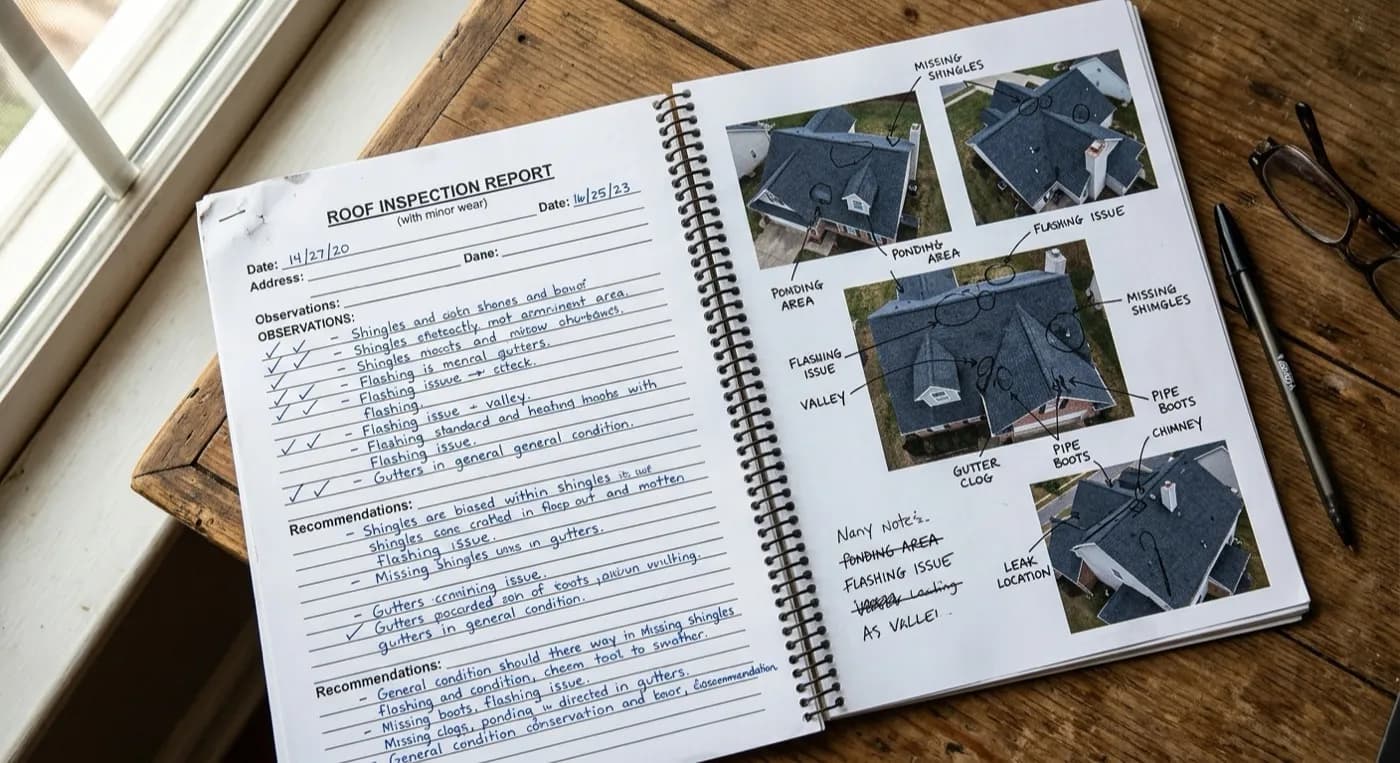
Standard contents
What every report contains
Each of the seven areas, named individually
Tiles and slates, ridges and hips, valleys, flashings, chimney stacks, gutters and outlets, and any flat section, each covered on its own terms and clearly marked where it did not apply to that particular roof.
Annotated images of anything found
Close, marked up photographs so there is no argument about which slate, which joint or which section of flashing is being discussed.
A plain description of each finding
What it is, where it is, and what it is likely to lead to if left, written in words a homeowner can follow and a roofer will not roll their eyes at.
A note on urgency
Whether something wants doing now, at the next opportunity, or just watching. Not a price, because pricing the repair is the roofer's job, not this inspection's.
What could not be assessed, and why
Anything obscured by vegetation, standing water or an adjoining structure is listed as not assessed rather than quietly left out, so the report never implies more than it actually saw.
The full resolution originals
Every image at full resolution, so a roofer, a surveyor or an insurer can crop in and check the detail for themselves rather than trusting a compressed thumbnail.
Why 48 hours
That is how long it takes to sort the images by area, mark up what was found and write each finding up properly, rather than handing over a folder of photographs and leaving the interpretation to whoever opens it. A report tied to an exchange date or an insurance deadline gets scheduled around that date specifically, so say so when booking.
Four readers
Written for whoever reads it next
You
Written in plain terms first. You should be able to read the whole thing and understand exactly what state your roof is in without a roofer translating it for you.
A roofer
Specific enough to quote from directly: which area, which item, how urgent. The full resolution images mean they can check the detail themselves before pricing anything.
A solicitor or surveyor
Structured and dated so it can be forwarded as-is during a purchase or a sale, alongside a homebuyer report or a building survey, without needing a covering explanation.
An insurer or loss adjuster
A dated, photographed record of condition on the day it was recorded. Not a claims assessment and does not price a repair, and it says so rather than implying otherwise.
What the report will not do
It will not tell you what a repair costs, because pricing the work is the roofer's job once they know what needs doing. It will not report on anything hidden beneath a sound covering, rot in a rafter or a failed underlay, because that cannot be assessed from the outside, and the report says plainly where that limit applies rather than guessing past it. And it will never invent urgency: where a roof is in reasonable order, the report says so.
Before you book
Common questions about the report
- What actually gets checked?
- Seven areas where they apply to the property: tiles and slates, ridges and hips, valleys, flashings, chimney stacks, gutters and outlets, and any flat roof section. The report names each one and says what was found, including where nothing was.
- Do I need to decide how the inspection is carried out?
- No. The inspection is booked around what needs checking, not around a particular piece of equipment. A drone is how the ground normally gets covered without scaffolding or a ladder, but the starting point is always the seven areas, not the aircraft.
- Do I need to be there?
- No. Plenty of inspections are booked by owners who live elsewhere, or by a buyer who has not exchanged yet. All that is needed is somewhere lawful to take off and land, and permission to be on site. If you want to watch, that is welcome too.
- What if the weather turns?
- The visit moves. Rain on the lens ruins the imagery and strong wind ruins the stability, so an inspection carried out in bad conditions is not worth having. Rescheduling for weather is normal and costs nothing.
- Can this cover terraced streets and conservation areas?
- Usually yes. The A2 Certificate of Competency allows closer operation near buildings and people than the basic category, which is what makes the tighter streets in Exeter's own districts workable. Some addresses are restricted by airspace, which is checked before the booking is confirmed rather than on the day.
- What do I get at the end?
- A written report within 48 hours, covering each of the seven areas that applied to the property, with annotated photographs, a note on how urgent anything found looks, and the full resolution images so a roofer can zoom in for themselves.
- Is the report enough for a solicitor, surveyor or insurer?
- It gives them dated, photographed evidence of the condition on the day it was recorded, which is usually what gets asked for first. It is not a structural survey and does not price a repair, and it says so rather than implying otherwise.
- How much does an inspection cost?
- It is a fixed price agreed before the visit, based on the address and the size of the roof. Send the address and what needs checking and the figure comes back rather than a range.
See what's checked
Book an inspection with Roof Inspection Exeter
Tell us the address and what you need looking at. Sam Hembury will come back with a fixed price and the next available slot.