Devon · EX4
Roof inspection in Pennsylvania
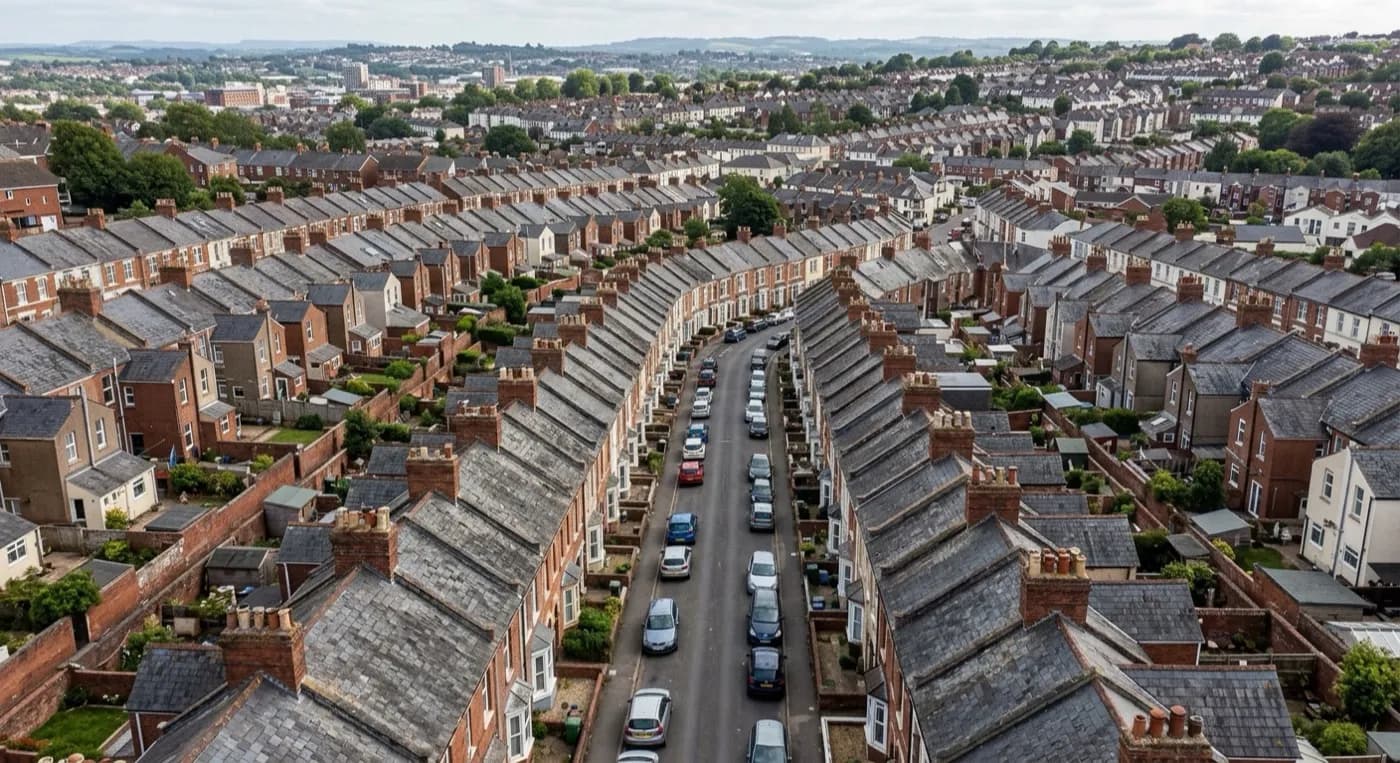
A roof inspection in Pennsylvania, the hillside district above the university where large converted villas carry decorative slate roofs on exposed, elevated ground.
Villas on the hill above the city
Pennsylvania climbs the hillside north of the city centre, from Longbrook Street up towards the university's Streatham campus, and the housing on the way up is substantial Victorian and Edwardian villa stock, a lot of it converted into flats or shared student housing given how close it sits to the university. The roofs are natural slate with decorative ridge crests on the larger properties, similar in character to St Leonards but on considerably more exposed ground.
That elevation is the thing worth being clear about here: Pennsylvania sits higher and more open than most of the rest of the city, and wind loading on ridge and verge fixings is a real consideration in a way it simply is not on the sheltered streets down by the river.
The university's presence has also left a mark on the roofscape beyond the housing itself: several converted properties carry later additions and alterations from decades of use as shared accommodation, and those additions have not always been maintained to the same standard as the original Victorian roof around them.
Ridge fixings and conversion dormers
Ridge and hip bedding is the first thing worth checking on this hillside, precisely because of the wind exposure: a bedding joint that would hold for years on a sheltered street can start moving sooner on an exposed slope near the top of Pennsylvania. Chimney stacks come next, given how many of these villas still carry multiple original stacks even after conversion into flats.
Flat roofed dormer extensions are common on the properties that have been converted for student or shared housing, added after the original build to create extra headroom, and those additions are worth checking as their own item rather than assuming they were built to the same standard as the original slope.
Valleys where a converted dormer meets the original roof plane are a specific weak point worth naming separately from a standard Victorian rear addition valley, since a dormer built decades after the house was originally finished rarely integrates as cleanly with the existing slate as an original Victorian valley does.
A question of scale and exposure together
For a Pennsylvania landlord or an owner of a converted villa, the inspection question usually combines two things at once: a large, complicated roof, and a more exposed position than most of the rest of Exeter. Both point towards the same answer, checking all seven areas properly rather than the parts a scaffold happens to reach easily from the street.
Nothing about that inspection needs to touch the building itself, which matters on a period villa where any physical access is a bigger undertaking than on a modern semi.
Booking it in
Access up Pennsylvania's steeper streets can be awkward for larger vehicles, which is precisely the kind of access problem an inspection avoids altogether, since nothing needs to be driven up the hill beyond the equipment itself.
For a converted property let to students or shared occupiers, the useful timing is often between tenancies, when the roof and any dormer additions can be checked without needing to coordinate around several tenants' schedules.
What the report is used for here
A landlord with a converted villa in Pennsylvania often uses the report to plan maintenance around the academic year, timing any repair work identified for the summer months when the property is more likely to be between lets, which the fixed price and 48 hour turnaround make straightforward to schedule around.
Where a villa has multiple dormer additions from successive conversions over the decades, the report treats each one as its own item, which matters given that later additions are frequently the weakest point rather than the Victorian roof they were added to.
Behind the survey
What Pennsylvania clients are actually buying
Seven areas, checked in order
Tiles and slates, ridges and hips, valleys, flashings, chimney stacks, gutters and outlets, and any flat section, checked in the same order on every property where they apply.
CAA registered
Operator ID and Flyer ID held, plus the A2 Certificate of Competency. Every flight is planned to the rules that apply to the site, and the paperwork is available before the visit if a solicitor, agent or insurer needs it.
100 megapixel camera
A DJI Mavic 4 Pro with a Hasselblad camera and 6K video. The resolution is what lets the inspection stand off the building at a safe distance and still show a hairline crack in a single tile.
Insured with Coverdrone
Full commercial cover for the operation. Certificates go to solicitors, agents and insurers as a matter of course, without anyone having to chase for them.
Nearby
Also covered around Pennsylvania
- St LeonardsA roof inspection in St Leonards, where large Victorian and Edwardian villas near the cathedral carry more decorative ridge and lead detail than a standard terrace.
- Stoke HillA roof inspection in Stoke Hill, the hillside suburb below Stoke Woods where 1930s semis meet more recent infill on exposed, elevated streets.
- Newtown, ExeterA roof inspection in Newtown, an inner city terrace neighbourhood off Magdalen Road where shared party walls make a fault rarely a one-property problem.
See what's checked
Book an inspection in Pennsylvania
Send the address and what is worrying you. Sam Hembury will come back with a fixed price and the next slot that suits the weather.