Devon · EX2
Roof inspection in Alphington
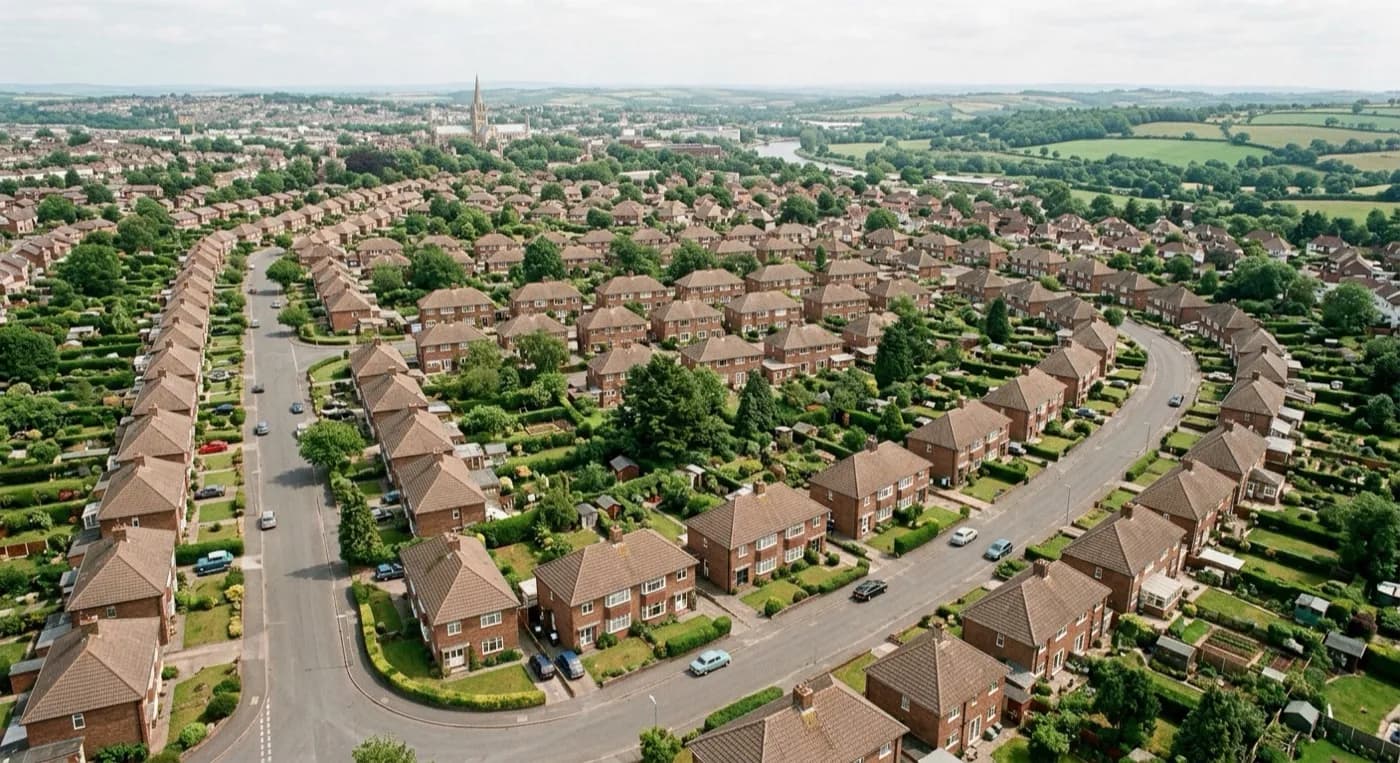
A roof inspection in Alphington, a former village on the Alphin Brook flood plain now ringed by estate housing towards Marsh Barton.
An old village core with a modern ring
Alphington was a separate village before Exeter's growth reached it, and the older core along Church Road still shows it, with natural slate cottages and a village green feel, before the housing changes character towards the A379 and the Marsh Barton trading estate, where post-war and more recent estate housing on concrete tile takes over.
The village sits on the flood plain of the Alphin Brook where it joins the Exe, which is the detail worth knowing before deciding what an inspection here should focus on.
Between the old core and the newer estate ring, a band of inter-war housing fills much of the middle ground, adding a third roof age into the mix that is worth its own consideration rather than being lumped in with either the village cottages or the most recent estate stock.
Older ridges, newer gutters and outlets
On the older village core, ridge and hip bedding is the priority, in the same way it is in any Devon village of comparable age, alongside valleys where a rear addition has been built onto an originally simpler cottage roof. On the newer estate housing further out towards Marsh Barton, shallower pitches move water faster and gutters and outlets are worth checking as routine rather than only once a problem shows.
The commercial edge near Marsh Barton also carries a number of felt and single-ply flat roofs, relevant to any inspection covering a property that backs onto or sits close to that trading estate.
On the inter-war band between the two, natural slate and early concrete tile both appear, and ridge bedding on this middle-aged stock is often at a similar point in its lifecycle to the older village cottages even though the buildings themselves are a generation newer.
A record worth keeping separate from ground level flooding
As with Alphington's neighbours across the flood plain, having a dated roof-level record kept separate from any ground level flood history is useful, particularly for anyone dealing with an insurer after a flood event who needs to show the roof itself was in known condition beforehand rather than leaving it as an open question.
Booking it in
Church Road and the older village streets are narrow in places, similar in character to other absorbed Devon villages, and a note on the exact address helps plan around the tightest sections.
For a property near Marsh Barton, it is worth flagging any adjoining commercial building so its flat roof can be considered alongside the residential property's own pitched roof where relevant.
Alphington's position on the flood plain means a number of properties have had flood defence measures added at ground level over recent years, and where that work has taken place it is worth mentioning when booking, since the same flood event that prompted it is often the reason a roof-level record is being sought now.
The village green area itself, being the oldest and most tightly built part of Alphington, is worth treating with the same access awareness as Exeter's other absorbed villages, where narrow older streets can limit where equipment is set up compared with the wider roads on the newer estate ring.
What the report is used for here
For a property on the flood plain, the report is most useful kept alongside, but clearly distinct from, any flood defence or ground level documentation, giving an insurer or a future buyer two separate, dated pieces of evidence rather than one conflated account.
For the newer estate housing towards Marsh Barton, the report more often supports routine maintenance planning, establishing whether a gutter or an outlet needs attention this year on a roof that is otherwise in generally sound condition.
Behind the survey
What Alphington clients are actually buying
Seven areas, checked in order
Tiles and slates, ridges and hips, valleys, flashings, chimney stacks, gutters and outlets, and any flat section, checked in the same order on every property where they apply.
CAA registered
Operator ID and Flyer ID held, plus the A2 Certificate of Competency. Every flight is planned to the rules that apply to the site, and the paperwork is available before the visit if a solicitor, agent or insurer needs it.
100 megapixel camera
A DJI Mavic 4 Pro with a Hasselblad camera and 6K video. The resolution is what lets the inspection stand off the building at a safe distance and still show a hairline crack in a single tile.
Insured with Coverdrone
Full commercial cover for the operation. Certificates go to solicitors, agents and insurers as a matter of course, without anyone having to chase for them.
Nearby
Also covered around Alphington
- St ThomasA roof inspection in St Thomas, where low ground by the Exe and a mix of Victorian terrace and later estate housing make a dated record worth having.
- IdeA roof inspection in Ide, a conservation village on Exeter's western edge, with a concentration of thatched cob and stone cottages along one street.
- ExminsterA roof inspection in Exminster, a village beside the M5 and the Exe Estuary marshes, spanning old stone cottages and newer estate housing.
See what's checked
Book an inspection in Alphington
Send the address and what is worrying you. Sam Hembury will come back with a fixed price and the next slot that suits the weather.