Devon · EX1, EX4
Roof inspection in Pinhoe
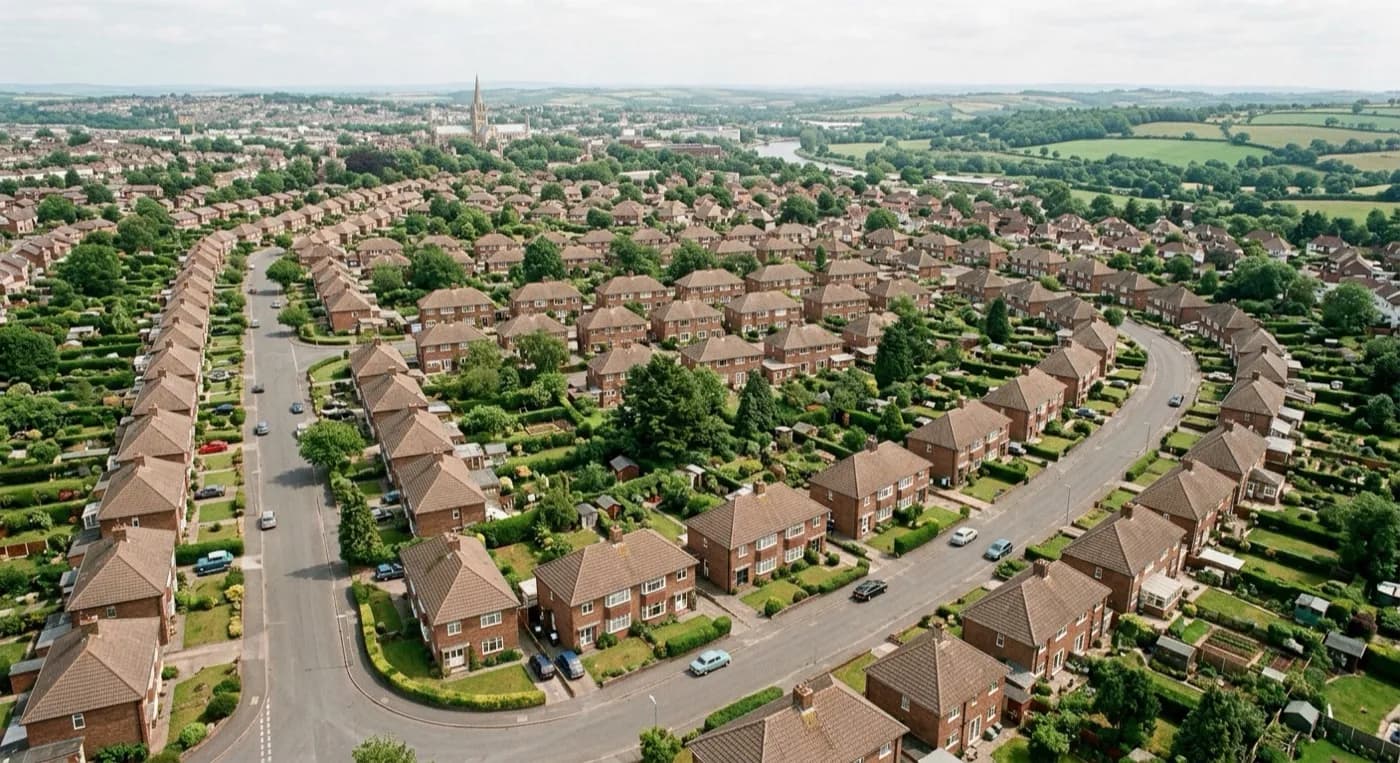
A roof inspection in Pinhoe, the fastest growing part of Exeter, where an old village core sits beside a large and still-expanding new-build estate.
The leading edge of the city's growth
Pinhoe is where Exeter is currently growing fastest, a former village on the north-eastern edge of the city now surrounded by a large and still-expanding ring of new-build estate housing pushing out towards Cranbrook. The old village core around the church keeps its stone and brick cottages, but the greater part of Pinhoe today, by area and by number of roofs, is recent construction.
The reopening of Pinhoe railway station has accelerated that growth further, with new phases of development continuing to be added on the approach towards Cranbrook, which means the roof stock here is still being built rather than settled.
New builds need checking too
It is easy to assume a roof built in the last decade needs no checking at all, and that assumption is the thing worth correcting here. Dry-fix ridge and verge systems, standard on nearly all of Pinhoe's new estate housing, remove the mortar bedding that fails gradually on an older roof, but a clip that was never properly seated at the point of construction fails just as completely, and it does so without the gradual warning signs an older roof gives.
On the older village core, the pattern is the familiar one for a Devon village: ageing ridge bedding and valleys at later additions, on natural slate and clay tile rather than the concrete tile of the surrounding estate.
Solar panel installations, increasingly common on the newest phases of estate housing, add their own set of roof penetrations and mounting brackets, each of which is a potential water entry point if not sealed correctly, worth checking specifically rather than assuming the panels themselves are the only thing that matters.
A defects-period question as much as a condition one
For a lot of Pinhoe's newer owners, the actual question behind booking an inspection is whether a new roof was put together properly in the first place, which is a different question from whether an old one has worn out. Getting that answer while the property is still inside its builder's defects period, and while a photographed record can support a snagging list, is worth doing sooner rather than later.
Booking it in
For a property still within its defects period, mentioning the build completion date when booking helps establish how much of that window remains and whether any finding is worth raising with the builder directly.
New estate roads in Pinhoe are generally straightforward to access, though ongoing construction work in the newest phases can affect available take off points, which is worth flagging in advance if the property sits close to an active building site.
For the old village core around the church, access is more comparable to Exeter's other absorbed villages, narrower streets and less passing space than the wide roads on the surrounding estate, worth mentioning if the property sits in that older part of Pinhoe rather than the newer development around it.
Buyers considering a Pinhoe new-build purchase sometimes book an inspection before completion where the developer allows it, using the same seven area checklist to form an independent view of build quality alongside whatever snagging process the developer itself runs.
What the report is used for here
For a new-build owner, the report most often supports a defects-period claim, giving the builder a specific, photographed finding rather than a vague complaint about a leak, which tends to move a snagging conversation along considerably faster than a description alone would.
For the old village core, the more familiar use applies: a maintenance record for a period cottage roof, useful in its own right regardless of anything happening on the surrounding estate.
Behind the survey
What Pinhoe clients are actually buying
Seven areas, checked in order
Tiles and slates, ridges and hips, valleys, flashings, chimney stacks, gutters and outlets, and any flat section, checked in the same order on every property where they apply.
CAA registered
Operator ID and Flyer ID held, plus the A2 Certificate of Competency. Every flight is planned to the rules that apply to the site, and the paperwork is available before the visit if a solicitor, agent or insurer needs it.
100 megapixel camera
A DJI Mavic 4 Pro with a Hasselblad camera and 6K video. The resolution is what lets the inspection stand off the building at a safe distance and still show a hairline crack in a single tile.
Insured with Coverdrone
Full commercial cover for the operation. Certificates go to solicitors, agents and insurers as a matter of course, without anyone having to chase for them.
Nearby
Also covered around Pinhoe
- WhiptonA roof inspection in Whipton, a large post-war estate on shallow pitched roofs where ridge and verge condition matters more than it would on a steeper slope.
- Beacon HeathA roof inspection in Beacon Heath, on the most exposed high ground on the city's northern edge, where wind loading matters more than it does further down the hill.
- PolsloeA roof inspection in Polsloe, close to the station and the Northbrook valley, where a mix of Victorian, inter-war and post-war roofs sit side by side.
See what's checked
Book an inspection in Pinhoe
Send the address and what is worrying you. Sam Hembury will come back with a fixed price and the next slot that suits the weather.